Roughly one in five adults in India reports chronic dry, itchy, or burning eyes — and rates in urban centres like Jaipur are higher still, driven by a combination of desert-region low humidity, heavy screen dependence, and the fine particulate air that blows off the Thar. Yet for a condition this common, the underlying biology surprises most people. Dry eye is not simply "not enough water in the eye." It is a disease of the tear film — a microscopically thin, precisely layered structure — and understanding why it breaks down is the key to making sense of every treatment, lifestyle change, or specialist visit you may encounter.
The tear film: three layers, one job
Every time you blink — around 15 to 20 times per minute when relaxed — your eyelids spread a fresh layer of tears across the eye surface. That layer is not a simple saline wash. It has three distinct components working together:
- Mucin layer (innermost). A gel-like layer produced by goblet cells in the conjunctiva. It helps the watery layer stick to the eye surface rather than bead off.
- Aqueous layer (middle). The thickest layer, produced by the lacrimal glands above each eye. It carries oxygen and nutrients to the cornea, which has no blood vessels of its own, and flushes away surface debris.
- Lipid layer (outermost). A thin oily film produced by the meibomian glands — a row of about 30 small glands along each eyelid margin. This layer slows evaporation of the watery layer beneath it.
Problems with any one of these layers can destabilise the whole film. When the film breaks down before the next blink, the corneal surface is exposed to the air. That causes inflammation, which damages the surface further, which destabilises the tear film even more — a self-reinforcing cycle that is why dry eye tends to worsen over time if left unmanaged.
Two main types — and why the distinction matters
Clinicians generally separate dry eye into two broad categories, though many people have a combination of both:
Aqueous-deficient dry eye
Here the lacrimal glands simply do not make enough watery tears. The medical term is keratoconjunctivitis sicca. It is more common in women, more common after menopause, and is also associated with several autoimmune conditions — most notably Sjogren's syndrome, where the immune system attacks moisture-producing glands throughout the body. Age is an independent risk factor: tear production measurably declines from the fourth decade of life onward in most people.
Evaporative dry eye
This is actually the more prevalent type, accounting for the majority of cases in most clinical studies. Here tear production can be normal, but the lipid layer produced by the meibomian glands is insufficient or of poor quality — so the aqueous layer evaporates far faster than usual. The root cause is usually meibomian gland dysfunction (MGD): a blockage or inflammation of those eyelid-margin glands. MGD is more common in people with rosacea or seborrhoeic dermatitis, and in people who wear eye make-up regularly without thorough removal, since cosmetic residue can clog gland openings.
Why does this distinction matter to you as a patient? Because treatment approaches differ. Pure aqueous-deficient disease may respond well to tear supplementation and tear-conserving strategies. Evaporative dry eye usually requires addressing the meibomian glands — through warm compresses, eyelid hygiene, and sometimes specialist procedures — not merely adding more drops. An eye care specialist can determine which type you have through targeted tests.
What dry eyes feel like: the full symptom picture
The symptoms of dry eye are broader than the name suggests, and a few are counterintuitive:
- Stinging, burning, or scratching. The classic presentation — a persistent low-grade irritation that worsens as the day progresses or after periods of sustained concentration.
- A foreign-body sensation. The feeling that something small is in your eye, even when nothing is there. This comes from surface irregularity when the tear film breaks down unevenly.
- Stringy mucus. Mucus that accumulates in or around the eye, particularly on waking, is common with dry eye disease.
- Sensitivity to light. An inflamed corneal surface scatters light differently, which can make bright environments uncomfortable.
- Redness. Chronically dry eyes are often persistently red or bloodshot.
- Watery eyes. Paradoxically, many people with dry eye disease experience excessive tearing at certain moments. This happens because the ocular surface, irritated by dryness, sends a reflex signal to the lacrimal glands to flood the eye. The reflex tears are watery and drain quickly — they do not solve the underlying instability.
- Blurred or fluctuating vision. Vision that is slightly blurry and improves briefly after a blink — then blurs again — is a hallmark of tear film instability. The tear film forms part of the eye's optical system, and when it breaks down, so does optical clarity.
- Difficulty with contact lenses. Lenses depend on the tear film for comfort and oxygen delivery. Even mild dry eye can make lens wear intolerable.
- Difficulty driving at night. Glare and halos around lights at night are worsened by a compromised tear film.
- Eye fatigue. Eyes that work harder to maintain focus through an unstable tear film tire more quickly during reading or screen use.
Symptoms usually affect both eyes, though one side may be worse. They often follow a pattern — worse later in the day, worse in certain environments (air-conditioned rooms, aircraft, windy or dusty outdoors), and worse during activities that reduce blink rate, such as reading, watching a film, or driving.
Common causes and contributing factors
Dry eye rarely has a single cause. More commonly, several factors combine to push the tear film past a tipping point. Understanding yours is the first step to managing them.
Age
Tear production tends to fall with age. Dry eye is significantly more common in people over 50 than in younger adults. This applies to both the aqueous and the lipid components of the tear film.
Sex and hormones
Dry eye is more common in women than men, particularly after menopause. Hormonal changes — including those associated with pregnancy and the use of hormonal contraceptives — can affect tear production and composition. The exact mechanisms are still being studied, but oestrogen and androgen receptors have been identified in the lacrimal and meibomian glands.
Screen and device use
When concentrating on a screen, most people blink incompletely and less often than they would at rest — sometimes fewer than five times per minute instead of the usual fifteen-plus. Each incomplete blink fails to fully spread the tear film. Over hours, this adds up to significant surface drying. This mechanism explains why dry eye symptoms have become more prevalent in younger adults in parallel with increased device use.
Environmental factors
Dry, dusty, windy, or smoky air accelerates tear evaporation. Indoor air conditioning and heating reduce ambient humidity significantly. In Rajasthan, seasonal dust and low-humidity desert air create a particularly challenging environment for tear film stability.
Meibomian gland dysfunction
As noted above, blocked or inflamed meibomian glands reduce the quality of the lipid layer. MGD is associated with rosacea, seborrhoeic dermatitis, and — importantly — prolonged or heavy eye make-up use without thorough daily removal.
Medications
A number of commonly used medicines can reduce tear production or alter tear composition. These include some antihistamines, decongestants, antidepressants, antihypertensives, diuretics, and certain acne treatments. If you have recently started a new medication and noticed a change in eye comfort, it is worth mentioning to your doctor — it may be possible to adjust the formulation or dose, or to manage the eye side-effect directly.
Contact lens wear
Contact lenses interact with and disrupt the tear film. Extended or daily lens wear is a known contributor to dry eye symptoms, and people with dry eye often find contact lens wear progressively uncomfortable over the course of a day.
Previous laser eye surgery
Laser refractive surgery (such as LASIK) severs corneal nerves temporarily. This can reduce the blink reflex and lacrimal gland signalling for months after the procedure. For most people, symptoms resolve over time, but for some they persist — this is a well-recognised trade-off of refractive surgery that surgeons discuss in pre-operative counselling.
Underlying health conditions
Several systemic conditions are associated with dry eye, including Sjogren's syndrome, rheumatoid arthritis, lupus, scleroderma, thyroid disorders, and vitamin A deficiency. If dry eye is part of a broader picture — with joint pain, skin changes, or other symptoms — your doctor may want to investigate whether an underlying condition is involved.
Diet and nutrition
Diets low in vitamin A (found in leafy greens, carrots, and dairy) and low in omega-3 fatty acids (found in oily fish, flaxseed, and walnuts) are associated with increased dry eye risk. Whether supplementation helps is still debated — some studies show benefit, others do not — but nutritional deficiency is a modifiable factor worth addressing.
What an eye care specialist looks for: how dry eye is diagnosed
There is no single test for dry eye. A specialist builds the diagnosis from a combination of history, examination, and targeted tests. If you visit an ophthalmologist or optometrist for dry eye symptoms, they may use some of the following:
- Comprehensive eye history. When symptoms started, which situations worsen them, current medications, medical history, and contact lens use all provide important context.
- Schirmer test. Thin strips of paper are placed under the lower eyelid for five minutes. The length of the strip wetted by tears gives a rough measure of tear production. This primarily assesses the aqueous component.
- Phenol red thread test. A short thread containing pH-sensitive dye is held against the lower eyelid for fifteen seconds. The colour change and length wetted indicate tear volume. It is faster and less uncomfortable than the Schirmer test.
- Tear break-up time (TBUT). A fluorescent dye is instilled in the eye. Under a specialised lamp (slit lamp), the examiner watches how quickly the tear film develops dry spots after a blink. A short break-up time suggests tear film instability.
- Corneal and conjunctival staining. Fluorescein or lissamine green dyes show areas of surface damage on the cornea and conjunctiva. The pattern of staining helps distinguish different causes.
- Tear osmolarity. Dry eyes tend to have higher salt concentration in the tears. A tear osmolarity test measures this directly and can help confirm the diagnosis and assess severity.
- Meibomian gland evaluation. The specialist may press gently on the eyelid to see whether the meibomian glands secrete oil normally, and may use transillumination or infrared imaging to assess gland structure.
- Matrix metalloproteinase-9 (MMP-9) testing. Elevated levels of this inflammatory marker in tears are associated with dry eye disease and can be detected with a rapid point-of-care test.
Not all of these tests are used in every appointment. The specialist selects based on the clinical picture. The aim is to identify whether dry eye is present, how severe it is, what type predominates, and what is driving it — because that shapes the treatment plan.
Treatment: what actually helps and what the limits are
Dry eye is a chronic condition for most people. That is an honest and important starting point. Treatment manages symptoms and protects the eye surface — it rarely produces a permanent, effortless resolution. The goal is to maintain a stable, comfortable tear film on an ongoing basis, and for many people that means building a routine rather than finding a cure.
Treatments range from simple self-care to specialist procedures, and the right combination depends on the type and severity of dry eye.
Artificial tears and lubricating drops
For mild to moderate symptoms, over-the-counter lubricating eye drops — often called artificial tears — are usually the first step. They supplement the natural tear film and can provide significant comfort. There are a few things worth knowing about selecting them:
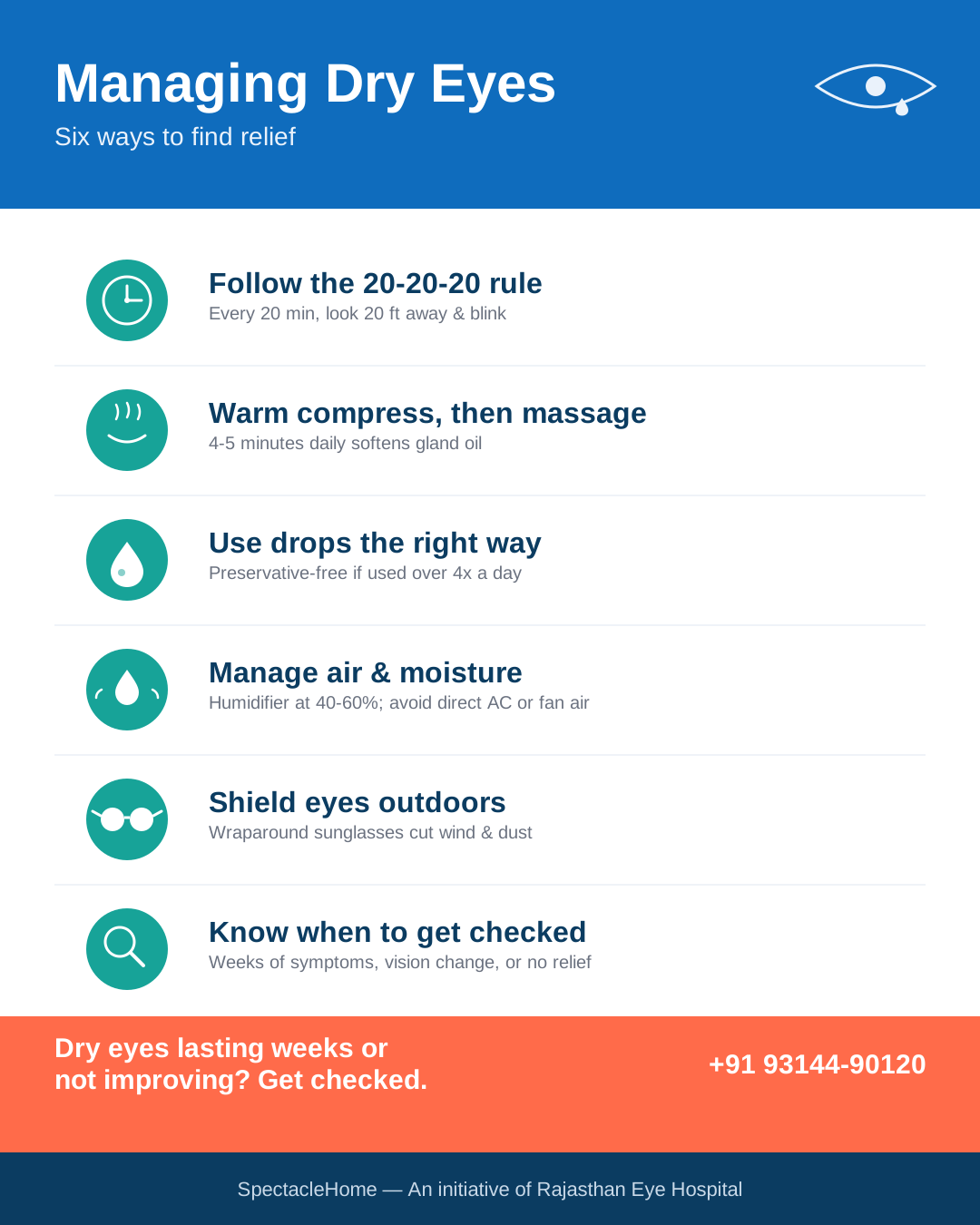
- Preservatives. Many drops contain preservative chemicals that extend shelf life. These are fine when used a few times a day, but if you need drops more than four times daily, a preservative-free formulation is a better choice, as frequent exposure to preservatives can cause or worsen eye surface irritation over time.
- Gels and ointments. Thicker formulations stay on the eye longer and provide extended relief. Because they can temporarily blur vision, they are more suitable at bedtime than during the day.
- Redness-relieving drops. Drops that primarily claim to whiten the eye by constricting blood vessels are generally not the right tool for dry eye. Used regularly, they can cause rebound redness and may mask rather than address the underlying problem.
Eyelid hygiene and warm compresses for meibomian gland dysfunction
When evaporative dry eye is driven by meibomian gland dysfunction, the physical state of the glands matters as much as what you put in your eye. A simple and effective home routine involves:
- Applying a warm, moist cloth to closed eyelids for four to five minutes to soften the oils inside the glands.
- Gently massaging the eyelid margin to help express the softened oil.
- Cleansing the eyelid margin with a dilute baby shampoo or dedicated eyelid cleanser to remove debris and reduce inflammation around the gland openings.
This routine needs to be done consistently — ideally once or twice daily — for weeks before meaningful improvement is seen. It is not a quick fix, but evidence supports its value for MGD-related dry eye.
Treating an underlying cause
If a medication is contributing to dry eye, a doctor may be able to switch to an alternative that does not carry the same side effect. If Sjogren's syndrome or another autoimmune condition is the root cause, managing that condition is central to managing the eye symptoms. If a nutritional deficiency is identified, correcting it is a logical step. The principle here is that no amount of lubricating drops will fully compensate if the primary driver is not being addressed.
Prescription treatments
For more persistent or severe dry eye, an ophthalmologist may prescribe specific treatments. The decision about whether any of these is appropriate for a given individual depends on clinical assessment — the discussion below is descriptive, not a recommendation, and details should be discussed with your own doctor.
- Anti-inflammatory drops. Because chronic dry eye involves an inflammatory cycle at the eye surface, drops that reduce inflammation can break that cycle. Options include short courses of steroid drops (used cautiously due to potential side effects with long-term use) and prescription drops that work on the immune component of the inflammation.
- Punctal plugs. Tiny silicone or collagen plugs can be placed in the tear drainage openings (puncta) at the inner corner of the eyelids. By partially blocking drainage, they increase the time tears remain on the eye surface. This is a reversible procedure for the silicone variety. It is particularly useful when tear production is genuinely reduced.
- Autologous serum drops. In cases of severe dry eye that does not respond to other treatments, drops made from the patient's own blood serum can be compounded. The serum contains growth factors and proteins that support corneal surface healing. This requires a hospital referral and blood draw, so it is reserved for difficult cases.
- Scleral contact lenses. These large-diameter rigid lenses vault over the cornea and create a fluid reservoir between the lens and the eye surface. They can provide dramatic relief in severe or treatment-resistant dry eye. They require specialist fitting and are not a first-line option.
- Thermal pulsation and intense pulsed light (IPL) therapy. Specialist in-clinic procedures that target meibomian gland dysfunction — thermal pulsation mechanically expresses blocked glands under controlled heat, while IPL reduces the inflammatory component around the glands. Evidence for both is growing, though they are not universally available.
Nutritional support
Omega-3 fatty acid supplementation is sometimes recommended alongside standard treatment, particularly for MGD-related dry eye. The evidence is mixed — some well-designed trials show modest benefit, others do not. If your diet is genuinely low in oily fish, flaxseed, and similar sources, improving dietary intake is a reasonable, low-risk step. Whether concentrated supplements provide meaningful additional benefit over a balanced diet remains debated.
What dry eye can lead to if left unmanaged
Mild dry eye is uncomfortable but rarely dangerous in the short term. Persistent, untreated, or severe dry eye is a different matter. The eye surface is exposed to infection, abrasion, and inflammation without adequate tear protection. Potential complications include:
- Increased infection risk. Tears contain antimicrobial proteins. Without adequate tear coverage, the eye surface becomes more vulnerable to bacterial and viral infections.
- Corneal abrasion and ulceration. When the corneal epithelium is repeatedly exposed, micro-damage accumulates. In severe cases this can progress to corneal abrasion or ulceration — painful and potentially affecting vision.
- Scarring. Repeated cycles of damage and healing can cause corneal scarring, which may permanently affect vision clarity. This outcome is unusual in people who seek and receive appropriate care, but it underlines why persistent, significant symptoms are worth taking seriously.
- Reduced quality of life. Even without structural damage, chronic dry eye has a measurable effect on quality of life — making reading, screen work, driving, and many everyday activities less comfortable. Studies have found that moderate to severe dry eye scores similarly to moderate angina on quality-of-life impact measures.
Honest tradeoffs: what treatment can and cannot do
It is worth being direct about the limits of current treatments for dry eye, because mismatched expectations are a common source of frustration:
- Most treatment is ongoing, not curative. For the majority of people with chronic dry eye, symptoms return when treatment is stopped. This is the nature of a chronic condition, not a failure of treatment. Thinking of dry eye management the same way you might think of managing blood pressure — something to keep in check consistently, not solve once — sets more realistic expectations.
- Response to treatment varies considerably. What helps one person significantly may provide only modest benefit to another, because the underlying mechanism differs. Finding the right combination often takes time and adjustment with a specialist.
- Some structural changes may be permanent. If meibomian glands have been damaged or have atrophied significantly before treatment begins, that structural loss does not reverse. Treatment can help the remaining glands function better and prevent further deterioration, but it cannot regrow gland tissue that is already gone.
- Artificial tears manage symptoms but do not address the underlying cause. Drops make the eye more comfortable and protect the surface while the underlying issue is being managed — but if the driving factor (MGD, medication side-effect, inadequate blinking) is not also addressed, drops alone often provide only partial or temporary relief.
- Lifestyle changes require consistency. The habit-based interventions — screen breaks, warm compresses, humidifier use, dietary adjustment — only work if maintained. Short-term improvements from a week of good habits followed by reversion to old patterns are common and underscore why dry eye management is a long-term commitment.
Everyday habits and environment: practical adjustments that support the tear film
Alongside any treatment your eye care specialist recommends, several practical changes can meaningfully reduce the burden on your tear film day-to-day:
- The 20-20-20 rule for screen users. Every 20 minutes, look at something at least 20 feet away for at least 20 seconds — and use that pause to blink fully and deliberately several times. This is not a cure, but it interrupts the pattern of reduced blink frequency during sustained screen use.
- Blink consciously and completely. Many people develop a habit of partial blinking during screen work. A full blink — upper and lower lids meeting — is required to properly spread the tear film. Practising full blinks is a surprisingly effective micro-habit.
- Position your screen below eye level. When the screen is above eye level, you open your eyes wider and expose more corneal surface area. A screen positioned slightly below eye level reduces this exposure and slows evaporation.
- Manage air flow around your eyes. Direct air from fans, heaters, car vents, and air conditioners significantly accelerates tear evaporation. Redirect vents, sit away from direct air conditioning, and consider a fan positioned toward your feet rather than your face at a workstation.
- Use a humidifier in low-humidity spaces. In dry indoor environments — particularly in Rajasthan's winter or in heavily air-conditioned offices — a humidifier can add meaningful moisture to the air and reduce tear evaporation rate. A humidity level between 40% and 60% is generally comfortable for most people.
- Protect your eyes outdoors. Wraparound sunglasses create a microclimate around the eye that reduces wind and dry-air exposure. This is especially relevant in dusty or windy conditions common in the region.
- Remove eye make-up thoroughly. Cosmetic residue that enters the meibomian gland openings along the eyelid margin can contribute to blockage over time. A proper daily make-up removal routine — with a dedicated eye make-up remover, not just face wash — matters for people who wear eye products regularly.
- Avoid smoke. Cigarette smoke is a well-established environmental irritant for dry eyes. Both active smoking and exposure to secondhand smoke worsen symptoms and are worth avoiding wherever possible.
- Use lubricating drops consistently, not just on bad days. If your dry eye is chronic, waiting until symptoms are severe before using drops means the surface spends time in a damaged state. Using drops proactively — even on comfortable days — maintains the surface in better condition.
When to see an eye care specialist
Self-care and over-the-counter drops are appropriate first steps for mild symptoms. But an eye examination is worth arranging if:
- Symptoms have been present for more than a few weeks without improvement.
- Drops or self-care measures are not providing sufficient relief.
- Symptoms are significantly affecting your work, driving, reading, or quality of life.
- You notice a change in your vision alongside dry eye symptoms — particularly any persistent blurring, halos, or light sensitivity.
- Your eyes are increasingly red, painful, or sensitive, which could indicate surface damage or infection developing.
- You have an underlying condition (autoimmune disease, thyroid disorder, rosacea) and have not had your eyes reviewed in the context of that condition.
- You are a contact lens wearer finding wear progressively less tolerable.
An eye care professional can determine the type and severity of your dry eye, identify any contributing factors that can be addressed, assess for surface damage, and guide the treatment approach that fits your specific situation.
Frequently asked questions
Can dry eye go away on its own?
It depends on the cause. Dry eye that is triggered by a temporary situation — a bout of illness, a short course of a medication, an acute environmental exposure — may resolve when that trigger is removed. Dry eye that is related to age, hormonal change, meibomian gland dysfunction, or an underlying health condition is typically chronic and does not simply go away on its own. For most adults with ongoing symptoms, management rather than resolution is the realistic goal.
Are eye drops the only treatment?
No. For evaporative dry eye driven by MGD, drops address symptoms but not the underlying cause. Eyelid hygiene and warm compresses are often as important, or more so. For moderate to severe cases, specialist assessment may lead to prescription treatments, punctal plugs, or procedures. The right combination depends on what is driving the dry eye in a particular individual — which is why specialist assessment is valuable when self-care is insufficient.
Can contact lenses make dry eye worse?
Yes. Contact lenses interact with and disrupt the tear film, and for people who already have dry eye, lens wear often makes symptoms worse. This does not necessarily mean stopping lens wear entirely — some contact lens designs and materials are better tolerated in dry eye than others, and a specialist can advise on alternatives. But it does mean that managing dry eye alongside lens wear usually requires more active attention to the tear film.
Does drinking more water help?
Staying well hydrated supports overall health, and severe dehydration can worsen dry eye. But drinking extra water beyond normal requirements does not significantly increase tear production for most people with dry eye — the lacrimal glands' output is regulated by local neural and hormonal signals, not simply by systemic hydration. Diet (particularly omega-3 intake and vitamin A adequacy) has a clearer, if modest, role than fluid intake alone.
Is dry eye linked to screen use?
Yes, in a direct and well-understood way. Screen concentration reduces blink frequency and tends to produce incomplete blinks — both of which impair tear film renewal. This explains why people notice dry eye symptoms more during or after prolonged screen sessions. Screen use is a contributing factor and trigger, but it is rarely the sole cause — it tends to bring out or worsen symptoms in people who already have some degree of tear film vulnerability.
Is dry eye the same in both eyes?
Symptoms usually affect both eyes, though one side may be more severe. The underlying drivers are generally systemic or bilateral in nature — age, hormonal status, medications, and environmental exposure affect both eyes simultaneously.
Can diet or supplements help?
Some evidence suggests that omega-3 fatty acids may modestly help, particularly in MGD-related dry eye, and that vitamin A deficiency contributes to certain types of dry eye. If your diet is genuinely low in these nutrients, improving intake through food is a reasonable step. Whether high-dose supplements add meaningful benefit on top of a balanced diet is still uncertain — some clinical trials show a benefit, others do not. This is not an area where strong promises can be made, but it is also a low-risk area to address.
Can dry eye affect my vision?
In the short term, the main visual effect of dry eye is fluctuating or mildly blurred vision that temporarily improves after blinking — a consequence of tear film instability rather than any structural change in the eye. With severe or prolonged untreated dry eye, there is a risk of corneal surface damage that could more significantly affect vision. This is one reason why persistent or worsening symptoms are worth having assessed rather than managed indefinitely with drops alone.
What should I expect at a first appointment for dry eye?
Expect a thorough history — questions about your symptoms, their pattern, your medications, and your daily environment and work habits. The specialist will examine your eyes under a slit lamp, may use dye drops to assess the tear film and corneal surface, and may perform one or more of the tests described above. You will likely leave with a clearer sense of whether dry eye is present, what type, and an initial treatment plan. Be ready to describe when symptoms are worst, what makes them better or worse, and what you have already tried.
A note on the regional context
Dry eye is a widespread condition globally, but the combination of factors common in Rajasthan — low ambient humidity in the Thar desert climate, exposure to dust and particulates, hot summers with heavy air conditioning use indoors, and growing screen time in a rapidly urbanising population — creates a particularly demanding environment for the tear film. Recognising that the local environment is a genuine contributing factor is not an excuse for dry eye, but it does mean that environmental adjustments (humidifiers, protective eyewear outdoors, managing indoor air flow) are especially relevant and worth taking seriously here — not just generic advice.