By the time most people notice their vision has gone dull, the cataract forming inside their eye has often been there for years. That is not unusual: the protein changes that cause the lens to cloud happen gradually, sometimes over a decade or more, before the blurring becomes hard to ignore. Understanding what a cataract actually is — why the lens clouds, what that does to your sight, and what your options are when symptoms start affecting daily life — puts you in a much better position to have a useful conversation with your eye doctor.
What a cataract is and why it forms
The lens of your eye sits just behind the iris (the coloured ring) and the pupil (the black opening). Its job is to focus incoming light precisely onto the retina at the back of the eye. For that focusing to work well, the lens needs to be clear. In a healthy young eye it is: the lens is made largely of water and protein, arranged in a specific way that keeps it transparent.
As you age, the proteins in the lens gradually change. They can begin to break down and clump together, and those clumps scatter and block light instead of letting it pass cleanly through. The result is a lens that is no longer fully transparent — a cataract. As the cataract grows and the clouding becomes denser, more light is blocked or scattered, and vision worsens accordingly.
It is worth noting that cataracts usually develop in both eyes, but not always at the same pace. One eye may have a more advanced cataract than the other, which can create an uneven difference in vision between the two eyes.
The different types
Not all cataracts cloud the same part of the lens, and the location affects how vision is altered:
- Nuclear cataract — forms in the centre (nucleus) of the lens. Distance vision tends to become blurry, though near vision may stay usable or even temporarily sharpen. As the nucleus yellows or browns over time, colour discrimination can also become more difficult.
- Cortical cataract — develops in the outer layer (cortex) that wraps around the nucleus, usually as white, spoke-like opacities that extend toward the centre. Glare in bright light is a common complaint.
- Posterior subcapsular cataract — sits at the back outer layer of the lens. This type tends to progress faster than the other two and can affect both near and distance vision, making bright lights and reading particularly difficult.
- Childhood or congenital cataracts — some people are born with cataracts or develop them in childhood, sometimes linked to a genetic cause, an infection during pregnancy, childhood disease, or trauma. These are managed differently from age-related cataracts and require early attention because vision development in the brain depends on receiving clear images from the eye during childhood.
Who is at higher risk — and why age is not the only factor
Age-related cataracts are by far the most common, because the protein changes described above are part of how the human lens ages. But several other factors can make cataracts more likely to appear or progress more quickly:
- Diabetes — blood sugar changes alter the chemical environment of the lens, accelerating the protein breakdown that causes clouding.
- Prolonged sun exposure — ultraviolet B radiation from sunlight damages lens proteins. This is one of the more modifiable risk factors, which is why UV-blocking sunglasses are consistently mentioned in eye-health guidance.
- Smoking and other tobacco use — smoking increases oxidative stress in the lens and is associated with higher cataract rates.
- Obesity — linked to increased cataract risk, likely through metabolic and inflammatory pathways.
- Excessive alcohol use — drinking large amounts of alcohol over time is associated with increased risk.
- Long-term corticosteroid medicines — prolonged use of steroid medications (oral, inhaled, or topical) can promote posterior subcapsular cataract formation.
- Previous eye injury, inflammation, or surgery — trauma or past surgical procedures in the eye can disrupt lens proteins.
- Family history — having close relatives who developed cataracts earlier in life may increase your own likelihood.
Having one or more of these factors does not make cataracts inevitable — it means they are worth being attentive to, especially with regular eye examinations as you get older. People with diabetes, high blood pressure, or obesity may also find that cataracts progress more quickly than they do in the general population, which is one reason why those conditions deserve consistent management.
Symptoms: what cataracts actually feel like in daily life
The challenge with cataract symptoms is that they develop so slowly that people often adjust to them without realising it — reading in brighter light, avoiding night driving, or sitting closer to the television. The common symptoms include:
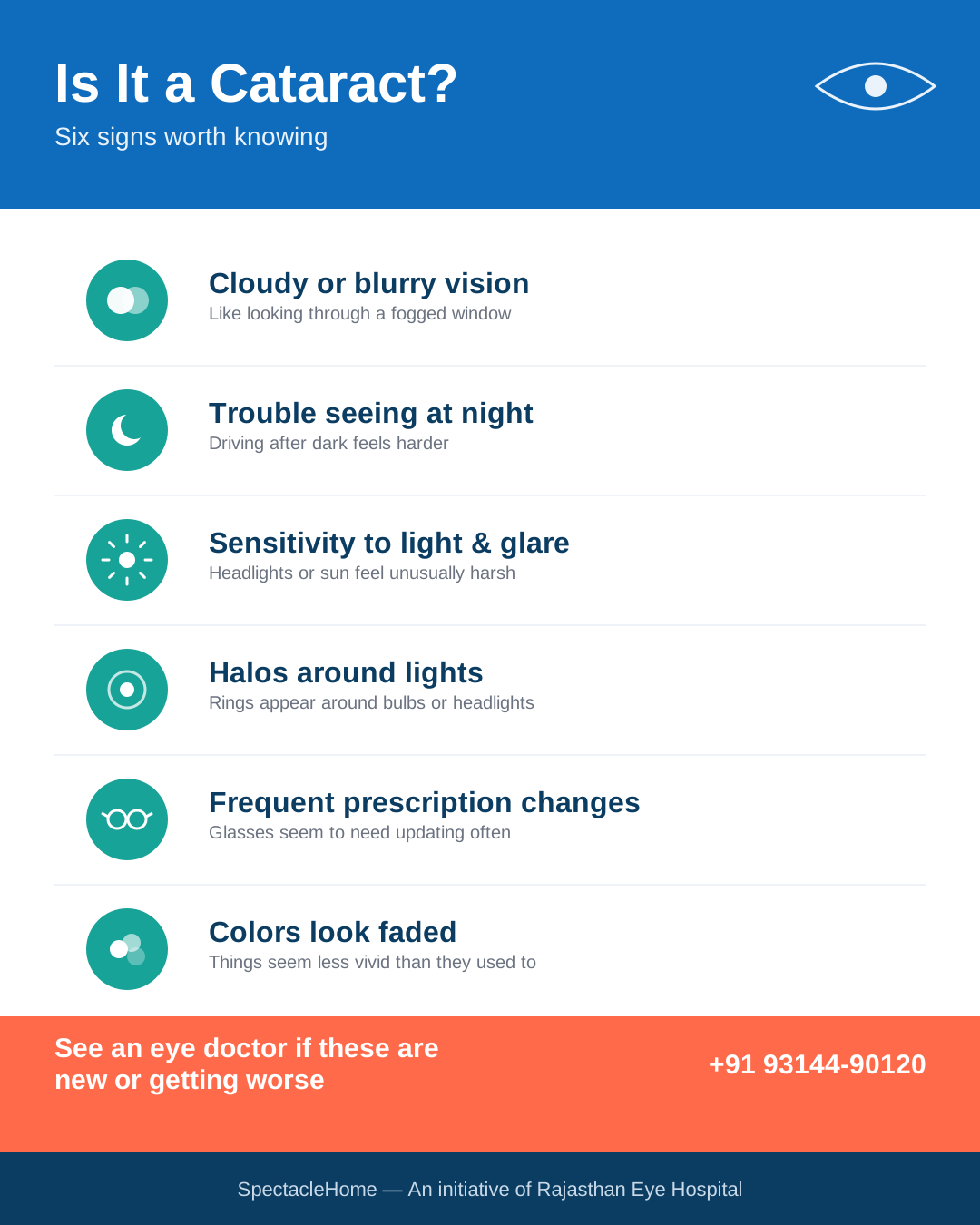
- Cloudy, blurry, or dim vision — the most characteristic symptom, often described as looking through a foggy or frosted pane of glass
- Difficulty seeing in low light or at night — headlights of oncoming cars may create uncomfortable glare, and road signs may be harder to read after dark
- Sensitivity to light and glare — bright sunlight or indoor lighting may seem harsher than it used to
- Halos or starburst patterns around lights at night
- Colours appearing faded, yellowed, or less vivid
- Frequent changes in eyeglass or contact lens prescription — the shifting refractive properties of the clouding lens can require updated prescriptions more often than usual
- Double vision in one eye (this symptom, if it appears, is worth reporting to your doctor promptly)
Not everyone experiences every symptom, and having one or two of these does not confirm a cataract. A comprehensive eye examination is the only reliable way to know whether a cataract has formed and how advanced it is.
Symptoms that need urgent attention
The symptoms above develop gradually and do not require emergency care. However, certain eye symptoms need prompt evaluation and are not typical of a cataract:
- Sudden loss of vision in one eye
- A sudden increase in floaters (small spots or threads drifting across your vision) or new flashes of light
- A shadow, curtain, or dark area spreading across part of your visual field
- Sudden severe eye pain
These can be signs of conditions such as retinal detachment, vitreous haemorrhage, or other urgent problems that are entirely separate from a cataract. If you experience any of them, seek eye care the same day.
How an eye doctor diagnoses a cataract
Diagnosing a cataract is done through a comprehensive eye examination, not from symptoms alone. The examination typically includes:
- Visual acuity testing — reading an eye chart to measure how clearly you can see at different distances, with each eye tested separately
- Slit-lamp examination — a specialised microscope that allows your eye doctor to look closely at the structures of the eye, including the lens, under high magnification and bright light. This can show whether a cataract is present and where in the lens it is located.
- Dilated eye exam — eye drops widen (dilate) the pupil so the doctor can see the lens and the structures at the back of the eye more clearly
- Intraocular pressure measurement — checks the pressure inside the eye, which is relevant to ruling out conditions such as glaucoma that can also affect vision
If surgery is eventually being considered, your doctor will also take measurements of the size and shape of your eye using a quick ultrasound or optical scan. These measurements are used to select the correct power for the artificial lens that would be implanted.
Managing symptoms before surgery becomes necessary
Many people with early cataracts find their vision adequate for daily activities for months or years with straightforward adjustments. These are not treatments that slow or reverse cataract formation — the lens changes will continue — but they can make day-to-day vision more comfortable in the meantime:
- Making sure your glasses or contact lens prescription is current. The shifting focus of a forming cataract can sometimes be partially compensated by an updated prescription.
- Using brighter lighting for reading, cooking, and close work
- Using a magnifying glass for fine print if needed
- Wearing anti-glare sunglasses with UV protection outdoors and when driving during the day
- Reducing night driving if glare from headlights is making it unsafe or uncomfortable
These adjustments work best when the cataract is still mild to moderate. As clouding progresses, there comes a point where no change in glasses, lighting, or technique can compensate adequately — and that is when surgery tends to become the more useful conversation to have with your doctor.
Cataract surgery: what it involves, what to expect, and what the real tradeoffs are
Cataract surgery is one of the most commonly performed surgical procedures worldwide. The core of what it does is straightforward: the clouded lens is removed and replaced with a clear artificial one, called an intraocular lens (IOL). Once implanted, the IOL requires no maintenance and stays in the eye permanently.
The most widely used technique is called phacoemulsification. The surgeon makes a very small incision — typically just a few millimetres — in the cornea, inserts a thin ultrasound probe, and uses high-frequency vibrations to break the lens into fragments that are then suctioned out. The outer shell of the lens (the capsule) is left in place to hold the artificial lens, which is then folded, inserted through the same small incision, and allowed to unfold into position inside the capsule. The incision usually does not require stitches.
The procedure is typically done under local anaesthetic with numbing drops, and most people remain awake throughout. It is usually performed as an outpatient procedure, meaning you return home the same day. The procedure itself generally takes under an hour.
What to expect after surgery
Vision often begins to improve within a few days, though it may be blurry initially as the eye adjusts. Some people notice that colours look brighter or more vivid after surgery — this is because the yellowed or clouded lens was filtering light in a way they had gradually adapted to, and the new clear lens removes that filter. Most discomfort — mild itching or soreness — settles within a couple of days. Full healing typically takes several weeks to up to two months. Your eye doctor will schedule follow-up visits, typically one day after surgery, then again at about one month, to check healing.
Most people need glasses at least some of the time after cataract surgery. Your prescription — if needed — is usually finalised between one and three months after surgery, once the eye has fully healed. If cataracts need to be removed from both eyes, the second surgery is scheduled after the first eye has recovered.
The choice of artificial lens
Before surgery, your ophthalmologist will discuss which type of intraocular lens suits your situation. The main categories are:
- Fixed-focus monofocal — designed to provide clear focus at one distance, typically distance vision. Most people who choose this type still need reading glasses for near tasks after surgery.
- Multifocal or extended depth-of-focus lenses — designed with different optical zones to allow both near and distance vision, potentially reducing dependence on glasses. These are not suitable for everyone and involve different optical trade-offs (such as halos in some people at night) that are worth discussing with your doctor.
- Toric lenses — designed to correct astigmatism at the same time as replacing the cataractous lens, which may be an option if you have significant astigmatism.
Insurance and health scheme coverage may differ between lens types. This is a practical factor worth raising when discussing options with your doctor.
Honest tradeoffs: the risks of cataract surgery
Cataract surgery is generally considered a safe procedure with a high rate of successful visual improvement, but it is surgery, and it carries real risks that deserve to be understood rather than glossed over. Complications are not common, and most can be treated, but they do occur:
- Infection — as with any surgical procedure, infection is a risk. Antibiotic eye drops are prescribed before and after surgery to reduce this risk.
- Swelling and inflammation — some swelling of the cornea or inside the eye can occur and usually settles with treatment.
- Bleeding — uncommon but possible.
- Retinal detachment — cataract surgery increases the risk that the retina (the light-sensitive layer at the back of the eye) may pull away from the eye wall. This is more likely in people who are very short-sighted. Retinal detachment is a serious complication that requires urgent treatment. The risk is relatively low, but it does not disappear.
- Raised eye pressure (glaucoma) — eye pressure can increase after surgery, which is monitored at follow-up appointments.
- Posterior capsule opacification (secondary cataract) — this is the most common issue after surgery. The back of the lens capsule that was left in place to hold the IOL can become cloudy months or years later, causing vision to blur again. This is not a return of the original cataract — it is the capsule, not the lens — and it is treated with a straightforward outpatient laser procedure that usually restores vision promptly.
- The artificial lens shifting out of position — rare, but can occur.
- Vision not fully improving — if other eye conditions are present — such as glaucoma, age-related macular degeneration, or diabetic retinopathy — the visual benefit of cataract surgery may be limited by the damage those conditions have caused. Removing the cataract does not reverse damage to the optic nerve or retina from these other conditions.
The risk of complications is somewhat higher in people who have other significant eye diseases or certain systemic medical conditions. This is why a thorough eye examination before surgery matters: it helps identify any other conditions that should be evaluated or managed before proceeding.
On timing: for most people, waiting to have cataract surgery will not damage the eye or make the eventual outcome worse. There is usually no medical emergency that requires rushing. That gives you time to understand your options and have a thorough discussion with your ophthalmologist about what to expect given your specific circumstances.
When surgery is typically recommended
There is no single objective threshold at which a cataract must be removed. The decision is guided primarily by how much the cataract is affecting your quality of life and your ability to do the things that matter to you — whether that is driving, reading, working, or safely navigating everyday tasks. Your eye doctor may also recommend considering surgery if the cataract is making it harder to diagnose or monitor other conditions at the back of the eye, such as age-related macular degeneration or diabetic retinopathy.
If your vision is still meeting your needs adequately, you may not need surgery for some time — and that is a reasonable position. The conversation to have with your ophthalmologist is: at what point does the cataract affect my safety or the activities I value most? That is a more useful framing than a fixed visual acuity number on its own.
Habits that support eye health over the long term
No strategies have been proven to prevent cataract formation definitively or to reverse a cataract that has already formed. However, the following habits are associated with better eye health generally and may reduce risk or rate of progression:
- UV-blocking sunglasses outdoors — specifically those that block ultraviolet B (UVB) radiation, which is the wavelength most associated with lens damage. A wide-brimmed hat adds further protection.
- Not smoking — one of the more clearly supported modifiable risk factors for cataracts, as well as for many other eye and systemic conditions.
- Managing diabetes carefully — keeping blood glucose well controlled reduces the pace of lens changes associated with diabetes.
- Limiting alcohol — excessive alcohol intake is linked to higher cataract risk.
- A diet with plenty of vegetables and fruit — associated with better eye health, likely through antioxidant nutrients, though no specific supplement has been proven to prevent cataracts.
- Regular comprehensive eye examinations — especially from age 60 onward, or earlier if you have diabetes, a family history of eye disease, or other risk factors. Examinations catch cataracts and other conditions at earlier, more manageable stages.
Frequently asked questions about cataracts
Can cataracts come back after surgery?
The original cataract cannot return once the clouded lens has been removed. However, a common occurrence after surgery — happening in a significant proportion of patients in the months or years afterward — is posterior capsule opacification (PCO), sometimes called a secondary cataract. This is not a new cataract but a clouding of the thin membrane (the capsule) that was left in place to hold the artificial lens. It causes blurring similar to what the original cataract produced. PCO is treated with a quick outpatient laser procedure called YAG laser capsulotomy, which creates a small clear opening in the clouded capsule. Most people experience prompt improvement in vision after this procedure.
Will I still need glasses after cataract surgery?
Most people need glasses at least some of the time after cataract surgery. If a standard monofocal lens is used (the most common choice), it provides clear focus at one distance — typically distance — and glasses will still be needed for reading. Multifocal and extended-depth-of-focus lenses aim to reduce dependence on glasses for both near and distance but come with their own considerations, including possible optical effects such as halos. The best lens option for you depends on your prescription, eye anatomy, and lifestyle needs — a decision worth discussing in detail with your surgeon before the procedure.
Is cataract surgery the same as laser eye surgery (LASIK)?
No. LASIK and similar refractive laser procedures reshape the cornea (the clear front surface of the eye) to correct focusing errors such as short-sightedness, long-sightedness, and astigmatism. They do not address the lens and they do not treat cataracts. Cataract surgery works on the lens — removing the clouded natural lens and replacing it with an artificial one. The two procedures are entirely different in technique, target, and purpose.
How long does recovery take?
Most people notice significant improvement in vision within a few days, and the majority of discomfort — mild soreness, light sensitivity, and foreign-body sensation — settles within a week. Your doctor may recommend avoiding strenuous activity, bending heavily, or rubbing the eye for around a week. Full healing typically completes within six to eight weeks, and your final eyeglass prescription, if needed, is determined at about one to three months post-surgery. Your specific recovery timeline may differ; your eye doctor will advise based on how your eye is healing at follow-up visits.
Do cataracts have to reach a certain severity before surgery can be done?
There is no longer a fixed threshold of severity that must be reached before surgery is performed. Older practice involved waiting until a cataract was "ripe" (very dense), but this is not current standard care. Today, the main consideration is whether the cataract is affecting your quality of life or ability to perform daily activities. If it is not, surgery is not urgent. If it is, you and your doctor can discuss timing that works for your situation.
Can children get cataracts?
Yes. Some children are born with cataracts (congenital cataracts) or develop them during childhood. Causes include genetic disorders, infections during pregnancy, childhood illness, and eye trauma. Cataracts in children need to be identified and addressed promptly because normal visual development in the brain depends on clear images reaching the eye during the early years of life. A cataract that significantly obstructs vision in a young child can lead to amblyopia (lazy eye) if not treated. Management of paediatric cataracts involves specialised care and usually a team approach over the years as the child grows.
Are there any eye drops or medicines that can dissolve a cataract?
At present, there is no eye drop or medication that has been proven to dissolve or meaningfully reverse a cataract in humans. Some research has explored compounds that might affect lens proteins, but none have demonstrated clinical effectiveness in well-conducted human trials as of the time of writing. The only treatment that effectively addresses a visually significant cataract is surgical removal of the clouded lens.
What is the difference between a cataract and glaucoma?
These are two distinct conditions that both affect vision but through entirely different mechanisms. A cataract is a clouding of the lens inside the eye, which scatters and blocks light — the result is blurred, dim, or hazy vision. Glaucoma is damage to the optic nerve, most commonly (though not always) associated with elevated pressure inside the eye. Glaucoma damage reduces side (peripheral) vision first and can eventually threaten central vision. Glaucoma damage to the optic nerve is irreversible; treatment aims to slow or prevent further damage, not to restore what has been lost. Cataracts, by contrast, can be treated surgically with good visual outcomes in most people who do not have other underlying eye conditions. It is also possible to have both conditions simultaneously, which can complicate surgical planning — another reason a thorough eye evaluation before any procedure matters.
Will cataract surgery cure my need for glasses entirely?
Cataract surgery can significantly improve visual clarity that had been reduced by the clouded lens, and for some people with multifocal or toric lenses, it may reduce dependence on glasses considerably. However, surgery does not guarantee that glasses will no longer be needed. Most people who choose a standard monofocal lens will still need reading glasses. And underlying refractive conditions, as well as normal age-related changes to focusing ability, are separate from what cataract surgery addresses. Your surgeon can give you realistic expectations based on your eye measurements and the lens options available to you.